
Reef Bay Sugar Factory: The Story of St. John’s Last Working Sugar Mill
Explore the history of Reef Bay Sugar Factory in St. John, USVI — the island’s last operating sugar factory, its steam-powered machinery, and how to visit by hiking or boat.

Why Reef Bay Isn’t Just Another Set of Sugar Mill Ruins
If you’ve spent much time exploring St. John, you’ve probably seen the remains of an old sugar estate. Reef Bay Sugar Factory, however, tells a different part of the island’s story.
Hidden near the shoreline on St. John’s remote South Shore, Reef Bay was the latest-operating sugar factory on St. John. It remained in agricultural production long beyond the height of the Danish colonial plantation era, eventually incorporated steam-powered machinery, and continued operating into the early 20th century.
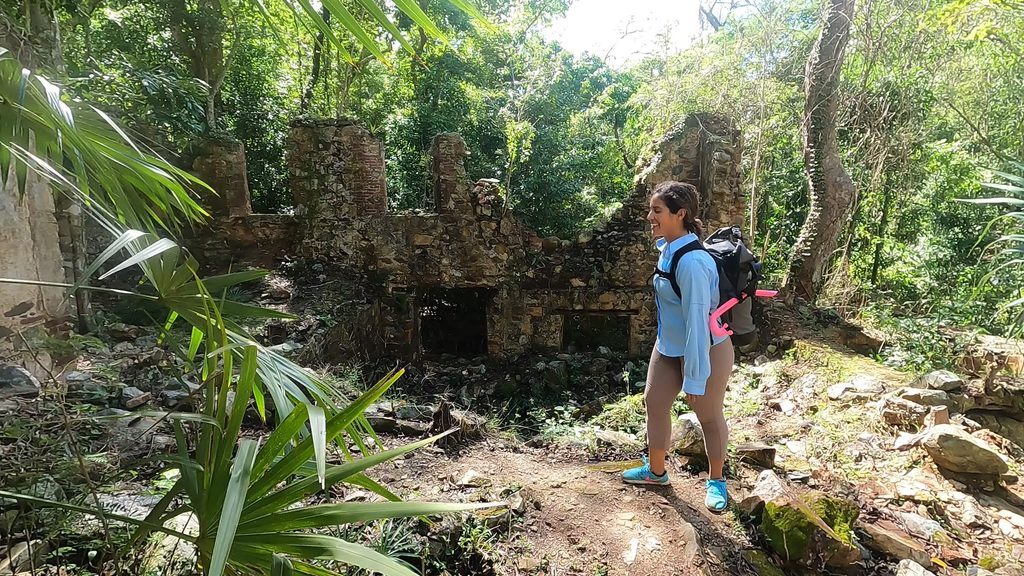
Today, its stone walls and surviving machinery sit surrounded by the forest of Virgin Islands National Park, and visitors have two very different ways to reach it: hike through Reef Bay Valley or approach the lower valley from the water.
Why Is Reef Bay Sugar Factory Important?
The Reef Bay Valley contains remains associated with several former agricultural estates, but the factory near the shoreline is particularly interesting because of how long it remained active.
The operation originally relied on an animal mill to power equipment used to crush sugar cane. Sometime after 1861, the factory was converted to steam power, and remnants of that steam engine and machinery can still be seen at the site.
Its longevity is even more remarkable. Sugar production continued here decades after slavery was abolished in the Danish West Indies in 1848. According to the National Park Service, operations finally ceased following a fatal accident in 1908.
Together, the surviving machinery and unusually late period of operation make Reef Bay one of St. John’s most interesting historic industrial sites.
How Was Sugar Made on St. John?
Understanding how sugar was produced makes it much easier to interpret the ruins you’ll see around St. John.
The basic process involved several stages:
- Grow and harvest the cane. Sugar cane was cultivated in cleared agricultural fields and harvested by hand.
- Transport it to the mill. Heavy stalks needed to be moved from the fields to the processing area.
- Crush the cane. Large rollers squeezed juice from the stalks.
- Boil the juice. Heat evaporated water and concentrated the juice through a series of boiling stages.
- Reuse the leftover cane. The crushed cane fiber, known as bagasse or historically as magass, could be dried and burned as fuel.
What appears today as a quiet collection of ruins was once an active industrial workplace requiring enormous amounts of physical labor.
The History Behind the Ruins
St. John’s plantation ruins can be beautiful, but their history shouldn’t be romanticized.
During the colonial plantation period, sugar production depended upon the forced labor of enslaved Africans and their descendants. People cleared and cultivated steep hillsides, planted and harvested cane, transported heavy crops, operated mills, and worked around extremely hot boiling houses and furnaces.
The surviving structures at Reef Bay are therefore more than interesting old buildings. They are evidence of a colonial economic system and of the people whose forced labor made that system function.
Emancipation came to the Danish West Indies in 1848, but agricultural operations at Reef Bay continued for decades afterward. That extended timeline makes the site particularly useful for understanding how St. John transitioned from the plantation era into a later period of agricultural and economic change.
Why Was the Sugar Factory Built Near the Water?
Stand near Reef Bay and look at the mountains rising behind you, and the importance of the coastline quickly becomes apparent.
Historically, the ocean functioned as a highway around St. John.
The island’s steep terrain made transporting people, heavy equipment, supplies, and agricultural products over land difficult. Access to a useful bay could therefore provide an important transportation advantage for an estate.
This is also one reason St. John’s history becomes especially interesting when viewed from the water. Historic locations that seem remote from modern roads often make much more sense when you imagine boats connecting the island’s coastal communities and working estates.
The Forest Has Reclaimed Reef Bay
From offshore, Reef Bay looks remarkably wild. Dense forest covers the hillsides and surrounds the historic ruins, creating the impression that the valley has always looked this way.
The landscape tells a more complicated story.
Hidden within and beneath today’s forest are:
- Former agricultural fields
- Estate roads and trails
- Stone walls
- Plantation structures
- Areas used for later agricultural activities
Over time, forest returned to much of this previously cleared and worked landscape. The vegetation surrounding Reef Bay Sugar Factory therefore represents ecological recovery layered over centuries of human land use.
How Do You Visit Reef Bay Sugar Factory?
There are two primary ways to experience the factory, and each offers a very different perspective on Reef Bay.
Option 1: Hike Reef Bay Trail
The traditional approach is the Reef Bay Trail, one of St. John’s best-known backcountry hikes.
The trail descends approximately three miles from St. John’s interior, passing through forest and several historic areas before reaching the factory and coast. Hikers lose roughly 900 feet of elevation, which means the return journey involves a significant uphill climb.
For active travelers who want to experience the entire valley, the hike is part of what makes Reef Bay special.
Option 2: Visit Reef Bay by Boat
The National Park Service also identifies the Reef Bay Sugar Mill as accessible by hiking or by boat.
When South Shore sea conditions permit safe access, approaching from the water allows visitors to explore the lower Reef Bay area and historic factory without completing the full hike from St. John’s interior.
We’ll admit our bias — we’re boat people — but this is one historic site where arriving by water adds something meaningful to the experience. You’re approaching the valley using the same transportation corridor that played such an important role throughout St. John’s history.
A boat visit can also make Reef Bay part of a larger South Shore itinerary rather than the sole destination for the day.
What About the Reef Bay Petroglyphs?
The Reef Bay Sugar Factory and Reef Bay Petroglyphs are separate destinations, and visitors should understand the distinction before planning their trip.
- The sugar factory is located near the coast.
- The petroglyphs surround a freshwater pool significantly farther inland.
- Reaching the petroglyphs requires additional hiking along Reef Bay Trail and its side trail.
- A short boat visit to the factory should not be treated as an easy way to see the petroglyphs.
If the Indigenous carvings are your primary interest, plan specifically for the Reef Bay Petroglyphs hike rather than assuming they’re located immediately behind the factory.

Is Reef Bay Sugar Factory Worth Visiting?
For travelers interested in St. John history, Reef Bay is absolutely worth considering.
Annaberg may be better known and considerably easier to reach, but Reef Bay offers a different experience. Visitors can see remnants of steam-powered sugar machinery, explore a factory that remained active into the early 1900s, and observe how tropical forest has reclaimed a former agricultural landscape.
It’s particularly interesting for repeat St. John visitors who have already explored the North Shore and want to experience a less familiar part of Virgin Islands National Park.
Make Reef Bay Part of a South Shore Day
Reef Bay fits naturally into a larger exploration of St. John’s South Shore. Depending on weather and sea conditions, a boat day might combine the historic factory with destinations such as:
- Little Lameshur
- Great Lameshur
- Salt Pond Bay
- Ram Head
- Tektite
Rather than moving from one beach to another, this type of itinerary can combine history, exploration, scenery, swimming, and snorkeling in a single day.
Reef Bay Sugar Factory FAQ
Final Thoughts on Reef Bay Sugar Factory
Reef Bay Sugar Factory is easy to overlook when people talk about St. John’s historic sites, but its surviving machinery, late period of operation, and location between the mountains and sea make it one of the island’s most interesting places to understand how St. John actually worked.
Whether you arrive after hiking through Reef Bay Valley or approach from the Caribbean Sea, take some time to look beyond the ruins themselves. The surrounding forest, steep terrain, coastline, machinery, and old estate landscape are all pieces of the same story.
Sources & Further Reading
- National Park Service — Reef Bay Trail and Sugar Plantation
- National Park Service — Reef Bay Trail
- National Park Service — Petroglyphs of Reef Bay
- St. John Historical Society — How Sugar Was Made on St. John During the Danish Colonial Period
- St. John Historical Society — A Brief History of Sugar and Sugar Production in the West Indies


