
Tektite Snorkeling Guide: Explore One of St. John’s Most Unique South Shore Snorkel Spots
Discover snorkeling at Tektite near Great Lameshur Bay on St. John, including underwater boulders and channels, the site’s incredible history, and how to explore this South Shore snorkel spot.
A Different Kind of Snorkeling on St. John
St. John has no shortage of great snorkeling, but Tektite offers something a little different.
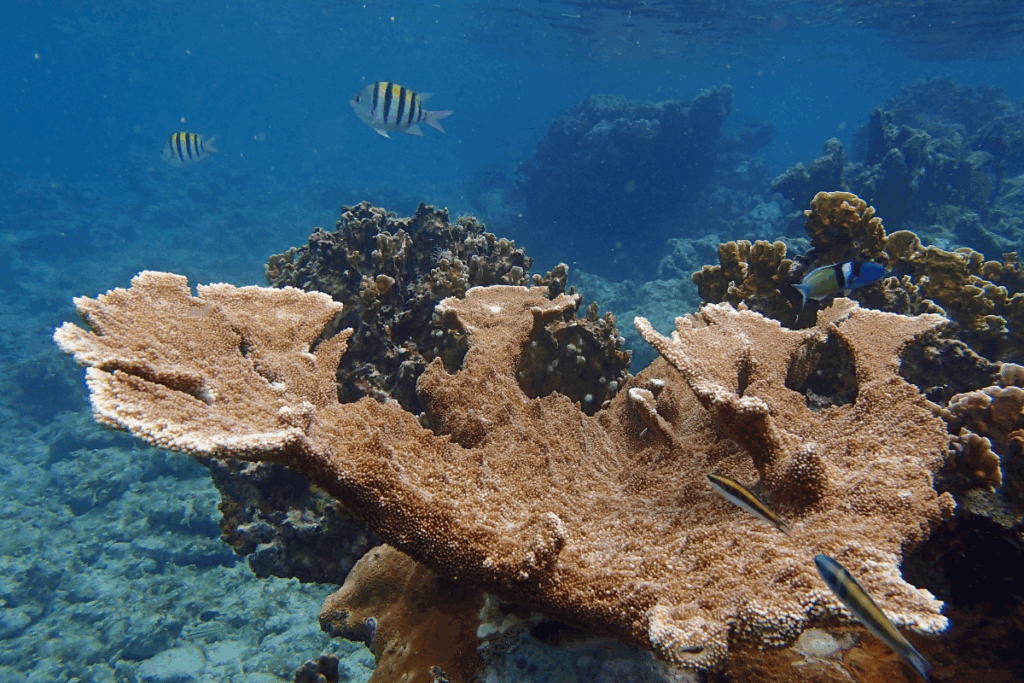
Located along St. John’s South Shore near Great Lameshur Bay, Tektite isn’t necessarily a place you visit hoping to find one particular animal. The real attraction is the underwater landscape itself.
Large boulders, rocky ledges, channels, crevices, and changes in depth create a much more three-dimensional snorkeling experience than simply floating over a sandy bottom or shallow reef.
There’s also an incredible story attached to this stretch of coastline. More than 50 years ago, scientists actually lived underwater here while conducting marine research, with NASA involved in studying how people adapted to prolonged isolation and confinement.
That combination of snorkeling, marine science, and St. John history makes Tektite one of the more unusual stops along the island’s South Shore.
Where Is Tektite on St. John?
Tektite is located in the Great Lameshur area of Virgin Islands National Park on St. John’s South Shore.
The snorkeling area we’re talking about is around the small point separating Great Lameshur from the Tektite Bay/Beehive Bay area.
It’s important not to confuse this with Yawzi Point, another excellent snorkel spot nearby:
- Yawzi Point separates Little Lameshur and Great Lameshur.
- Tektite Point is on the opposite side of Great Lameshur, toward the Tektite Bay area.
The two sites are close enough that they can work extremely well together for snorkelers exploring Lameshur.

What Makes Tektite Snorkeling Different?
The easiest way to understand Tektite is to compare it with other popular St. John snorkeling experiences.
At Maho Bay, much of the excitement revolves around seagrass habitat and the possibility of seeing sea turtles.
At another site, you might follow a shallow coral reef or snorkel around a cay.
As for Tektite, a major part of the attraction is the seafloor’s physical structure.
Depending on conditions and exactly where you explore, snorkelers can encounter:
- Large underwater boulders
- Channels running between rocks
- Canyon-like formations
- Rocky ledges
- Crevices and overhangs
- Changes in depth
- Coral and other marine growth on hard surfaces
- Protected spaces where fish can shelter
Rather than swimming toward one specific attraction, the fun is often in following the terrain and seeing what appears around the next rock formation.
Where Should You Snorkel at Tektite?
When conditions cooperate, the small point between Great Lameshur and the Tektite Bay (unofficial name) area is where we’d focus the snorkel. This may be a far swim depending on your entry point.
The rocks and boulders around the point create more structure than the open portions of the bay. Channels and gaps between those rocks also give the snorkel a more exploratory feel.
A good approach is to:
- Begin in an area protected from the prevailing conditions.
- Follow the rocky shoreline toward the point.
- Spend time looking around boulders, ledges, and crevices rather than swimming quickly past them.
- Pay attention to changes in wind, swell, and current as you approach more exposed water.
- Turn around whenever conditions or your comfort level suggest it’s time.
Exactly how much of the point you should explore depends on the day.
Is Tektite Good for Beginner Snorkelers?
Tektite is best for snorkelers who are reasonably comfortable in the water, particularly if the goal is to explore around the point.
South Shore conditions can change with wind and swell, and swimming around a rocky point is different from staying close to shore inside a protected bay.
Less experienced snorkelers can still enjoy the area when conditions are calm, but they should stay within their comfort zone and avoid venturing into exposed water simply because stronger swimmers are doing it.
For confident swimmers on a calm day, Tektite can be a really fun place to explore.
The Incredible History Beneath This Snorkel Spot
Tektite isn’t named after a reef, fish, or geological feature.
It’s named after an underwater research program that took place here in 1969 and 1970.
During Tektite I, four scientists lived approximately 50 feet beneath the surface for 60 consecutive days. Instead of making ordinary dives and returning to the surface each time, the aquanauts lived inside a pressurized underwater habitat and could leave directly from their submerged home to conduct research.
The project involved several major organizations, including:
- U.S. Department of the Interior
- U.S. Navy
- NASA
- General Electric
Scientists conducted marine research while other researchers studied how humans responded to extended periods of isolation and confinement.
Tektite II followed in 1970 and included oceanographer Sylvia Earle and the program’s famous all-women aquanaut team.
Knowing that story makes snorkeling here considerably more interesting. You’re exploring the same general underwater environment that attracted scientists to Lameshur more than half a century ago.
Why Did Scientists Choose This Area?
The Lameshur area offered researchers several useful marine environments relatively close together.
These included:
- Coral habitat
- Seagrass
- Sandy bottom
- Rocky areas
- Clear tropical water
- Diverse marine life
- A relatively isolated setting
Those characteristics made it possible for scientists to study different habitats without traveling far from their underwater laboratory.
Interestingly, the variety that made this area useful for marine science is also part of what makes the South Shore so interesting for snorkelers today.
Can You See the Tektite Underwater Habitat?
No, and this is worth knowing before you visit.
The original Tektite habitat is no longer sitting on the seafloor. It and its associated equipment were removed after the research programs ended.
You aren’t snorkeling out to find an underwater building, laboratory, or wreck.
What you’re visiting is the location where the experiments took place and the underwater environment the aquanauts came here to study.
If the history interests you, we’ve put together a separate guide to the Tektite Project, NASA’s involvement, and the scientists who lived underwater off St. John.
Getting to Tektite from Land
Because Tektite is adjacent to Great Lameshur, land-based visitors first have to reach the Lameshur area.
The National Park Service recommends four-wheel drive for the rough road into Lameshur, and visitors should check their rental-car agreement before attempting it because some rental companies restrict travel on that road.
From there, reaching the best snorkeling areas may involve a combination of walking and swimming, depending on where you enter. Accessing Tektite may be a far swim depending on your entry point.
If you’re planning to drive down specifically for snorkeling, bring everything you need. Lameshur doesn’t offer the same visitor facilities you’ll find at more developed St. John beaches.
Why Tektite Is Particularly Good by Boat
We’ll admit our bias here, but Tektite is one of the St. John snorkel spots that makes a lot of sense from a boat.
A boat allows you to skip the difficult Lameshur road and approach the snorkeling area directly from the water. More importantly, a knowledgeable captain can evaluate conditions around the point and choose an appropriate place for the group to enter.
A boat day also makes it easy to combine Tektite with several nearby destinations rather than treating it as a standalone trip.
For a snorkel-focused South Shore day, you might explore:
- Yawzi Point for rocky coral shoreline and reef habitat
- Great Lameshur for swimming and scenery
- Tektite for boulders, channels, and underwater terrain
- Another South Shore site if conditions and timing allow
Each stop offers something slightly different underwater.
Who Will Enjoy Tektite Most?
Tektite is particularly worthwhile for:
- Confident snorkelers who enjoy exploring underwater terrain
- Repeat St. John visitors looking beyond the usual snorkeling beaches
- Divers who are interested in a solid coral reef and architectural dive (boat only)
- Science and engineering enthusiasts who will appreciate the Tektite/NASA story
- Families with capable swimmers looking for an adventurous snorkel
- Travelers exploring the South Shore by boat
It may be less appealing to someone whose only goal is finding the easiest possible shallow-water snorkel or lounging on a wide sandy beach.
Tektite Snorkeling FAQ
Final Thoughts on Snorkeling Tektite
Tektite isn’t the classic St. John snorkel where you swim out over a sandy bay hoping to find a turtle. Its appeal is more about exploration.
The boulders, channels, ledges, and changing underwater terrain give snorkelers something different to follow, while the history adds another layer to the experience.
More than 50 years ago, scientists chose this area because of the diversity of its marine environment. Today, that’s still one of the best reasons for snorkelers to explore it.
Sources & Further Reading
- St. John Historical Society — Tektite Program Overview
- St. John Historical Society — Crystal Blue View of Tektite II
- National Park Service Research Archive — Tektite Program and Coral-Reef Fish Ecology
- NASA Technical Reports Server — Project Tektite I: A Multiagency 60-Day Saturated Dive
- NOAA — Undersea Labs, Habitats & Observatories Collection


